

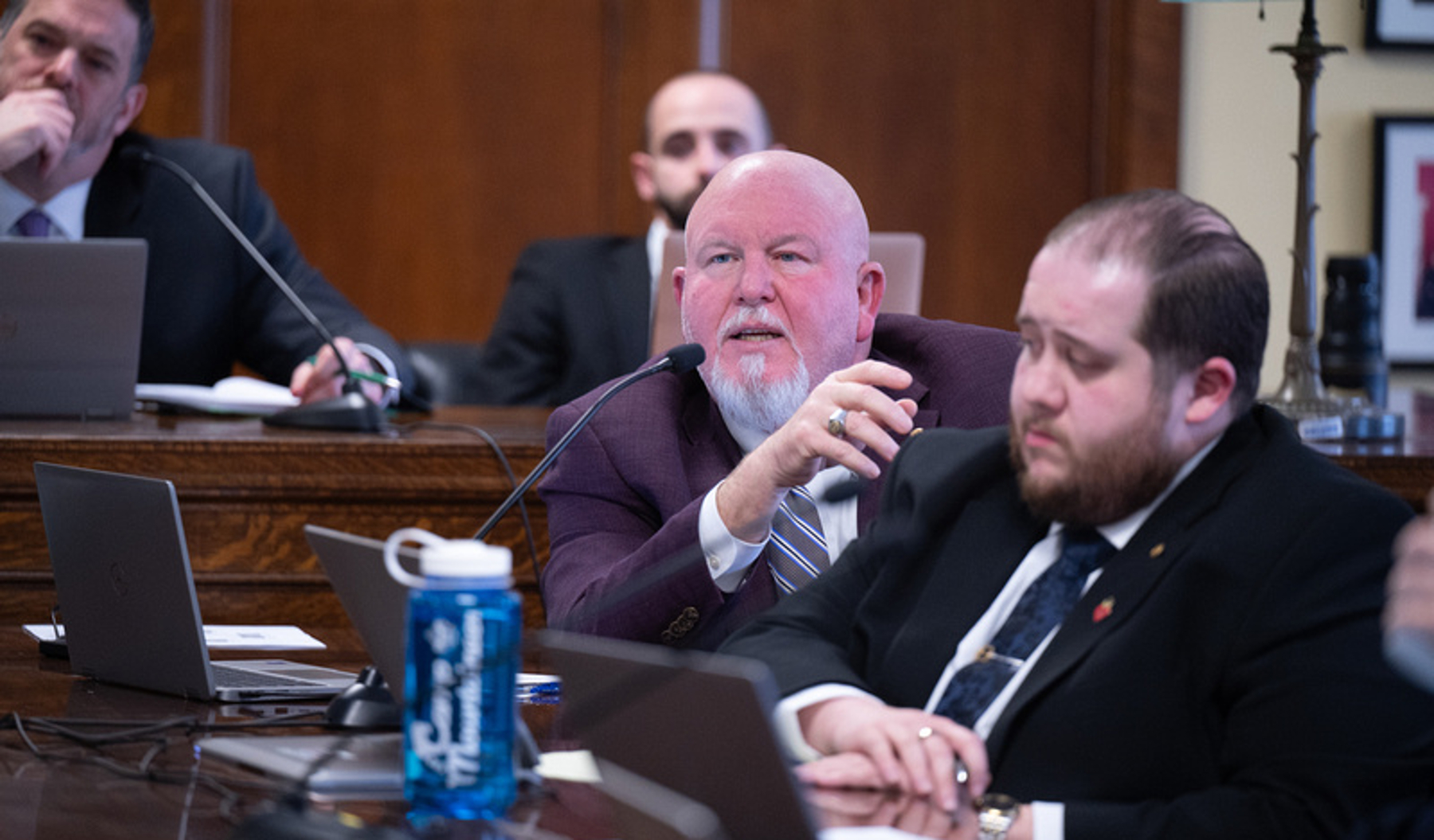
CHARLESTON — Del. Scot Heckert (R-Wood, 13) has introduced legislation that would explicitly restore voting rights to individuals convicted of felonies once they are released from incarceration.
Del. Heckert introduced House Bill 4406 (2026), which would amend state law to clarify that people become eligible to register to vote and cast a ballot upon release from incarceration for a felony conviction. The bill applies to individuals released through pardon, parole, probation or completion of their sentence.
Under current West Virginia law, individuals convicted of a felony, treason or election bribery are disqualified from voting while serving their sentence. House Bill 4406 would eliminate post-release restrictions and clearly state that voting rights are restored once incarceration ends.
The proposal would amend §3-2-2 of the state code, which governs voter registration eligibility, by adding language that affirms a person’s right to vote after release from incarceration, regardless of whether supervision continues through parole or probation.
Supporters of the bill argue that restoring voting rights encourages civic participation and successful reintegration into society. They say clear statutory language would reduce confusion among election officials and formerly incarcerated individuals about when voting eligibility is restored.
Critics have raised concerns that allowing individuals on parole or probation to vote could weaken accountability for serious crimes and alter long-standing voting qualifications, while also endangering public safety.
The bill would not change voting eligibility for individuals currently incarcerated, nor would it alter restrictions related to mental incompetence as determined by a court.
House Bill 4406 has been referred to the Committee on the Judiciary for consideration during the 2026 legislative session.